Shreyas Urgunde

MSc Finance, Warwick Business SchoolUnited Kingdom

Hello, I’m Shreyas Urgunde, an economics and finance researcher with an MSc in Finance from Warwick Business School. My work focuses on empirical finance, econometrics, and applied economic analysis, including predoctoral research experience with the HAI Lab at the University of Oxford.

I enjoy financial storytelling. I use data, code, fancy charts and human intuition to make sense of markets, financial structures, and the stories we tell to convince the world (and often ourselves) that risk is manageable, value is objective, and markets are efficient (spoiler: not always).
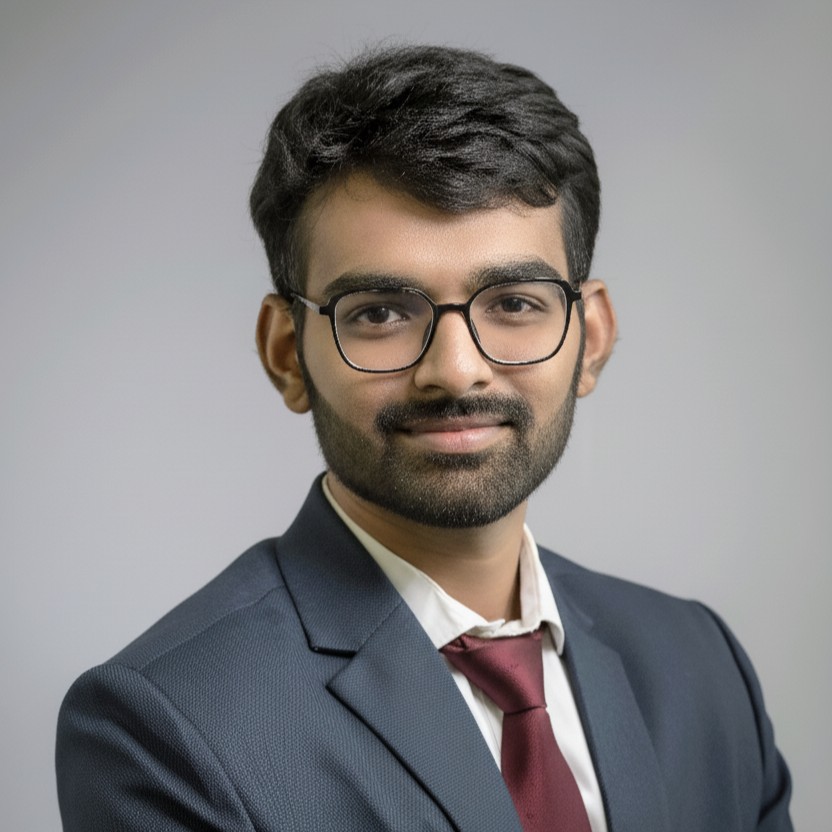

Portrait of Shreyas Urgunde

Research Interests

My research interests centre on financial markets and macroeconomics, particularly monetary policy, central bank communication, and asset pricing. I am interested in how monetary policy signals shape market expectations, and why financial assets respond differently to the same information or implied policy sentiment.

These interests shape both my academic research and independent projects. The projects below include my master’s dissertation on ECB communication and financial markets, alongside an automated platform for tracking global macroeconomic indicators and analysing RBI's monetary policy sentiment.

Master’s Thesis

ECB Narrative Tone and Market Impact

My master’s thesis examines how the tone of European Central Bank communications influences euro-area markets across policy statements, press conferences, Monetary Policy Accounts, and Executive Board speeches.

The Economics Hub

Global Macro & RBI Sentiment Tracker

This project is a fully automated data platform that tracks key global macroeconomic indicators and measures the sentiment of the Reserve Bank of India’s monetary policy communication using a large language model (Anthropic’s Claude Opus).

How I Work

I approach financial questions through structured research, economic intuition and quantitative analysis. I prefer to understand a problem in its context and develop an initial understanding independently before turning to analytical tools. Of course, AI can be useful, but introducing it too early can encourage premature framing before assumptions and competing explanations have been properly examined. I then use data and appropriate methods to test these ideas, assess what the evidence supports and communicate the findings clearly.

  1. Frame the problem

    Identify the underlying economic, financial or business question, the mechanisms involved and the evidence needed to investigate it.

  2. Build the evidence

    Collect, validate and organise information from official statistics, market data, company disclosures and academic research. Keep sources and assumptions traceable.

  3. Analyse and test

    Use econometrics, financial analysis, time-series methods and economic reasoning to separate a plausible story from one the evidence supports.

  4. Communicate the result

    Translate the analysis into a clear chart, memo, dashboard, presentation or piece of writing that helps someone understand the conclusion quickly.

  5. Automate what repeats

    Turn recurring analysis into reproducible workflows, databases, scripts and dashboards so the same work does not need to be rebuilt manually.

Tools I use

Analysis & data

  • Python
  • R
  • Stata
  • SQL
  • Excel

Build & automate

  • VS Code
  • Git / GitHub
  • Docker

Write & organise

  • LaTeX
  • Obsidian

Coding agents

  • Claude Code
  • Codex
Working with coding agents: some good habits and cool people to follow in this space

Educational Platforms

Outside the academic space, I’ve created a number of educational platforms to make topics like economics, finance, geopolitics, and social justice more accessible to wider audiences. These platforms have a combined following of over 7,000 people and include:

  1. Instagram

    Empowered Humans of Earth

    @empowered.humans.of.earth

    exploring economics, social issues, privacy and current affairs

  2. Instagram

    The Economics Hub

    @the.economics.hub

    curating macro trends and financial explainers

  3. Substack

    The Economics Hub on Substack

    economicshub.substack.com

    deep dives on various topics. Please follow my weekly newsletter!

Selected Writing

Explore more
  • 22 min read

    Iran War is More Than Just Oil

    This analysis investigates the systemic second and third-order effects of the escalating Iran conflict on the global economy. It breaks down how the conflict is tightening bottlenecks in non-oil sectors people often overlook such as agriculture, shipping, semiconductors, energy and more.

  • 15 min read

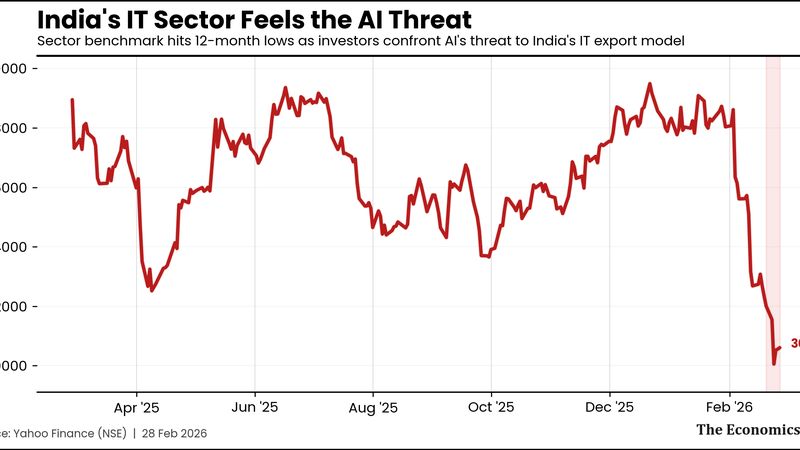
    Will the AI Boom Actually Hollow Out Its Own Customers?

    In this article, I explore and challenge the usual AI doomsday narratives with necessary counter-arguments to provide a more nuanced view of the AI transition and enterprise technology adoption.

  • The Boar

    5 min read

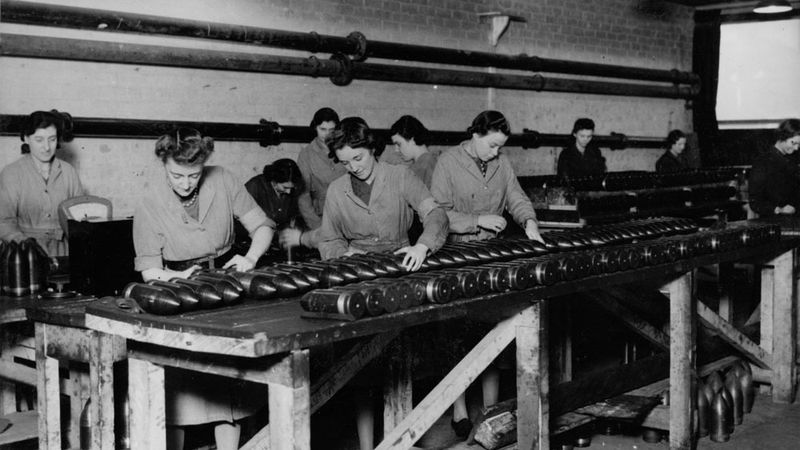
    Is War Good for the Economy?

    Explains how inflation, deficit finance, and military outlays can inflate GDP during war while hiding declines in living standards and productive capacity.

  • Instagram

    Beyond LLM-Driven Chatbots: The Case for Privacy-Focused Miniature AI Models

    Miniaturised AI may not match the robustness and convenience of large language models (LLMs), but they may address the critical concerns surrounding data privacy, resource efficiency, and architectural complexity.

Outside Work

When I’m not working on the usual finance stuff, I like to:

  • Volunteer for social causes that help marginalised students get into higher educational institutions

    • Project EduAccess

      Democratising access to higher education and professional opportunities

    • Eklavya India Foundation

      Helping first-generation students from marginalised communities reach top universities

    • Bahujan Economists

      Increasing the representation of marginalised communities in economics research

  • Read books — sometimes for leisure, often to deepen my understanding of a particular field

    Want some book recommendations?
  • Cook meals without planning — usually hoping to discover something new through randomness (10/10 would recommend)

  • Explore privacy, threat modelling, and decentralised technologies

  • Spend arguably too much time blundering pieces on Chess.com :-D

  • Watch football and tennis

  • Go for a run to clear my mind and reset

  • Lift weights — strength training is one thing I never take lightly

Get in Touch

If you’re interested in talking research, sharing ideas, or just debating the credibility of classical economics in modern markets, feel free to reach out!